A little over a year ago I was in a bar celebrating the French Rugby team’s qualification for the 2016 Summer Olympics. It was monumental. Rugby 7s had never before been an olympic sport, and the French team had never set foot in an olympic arena. On the evening that I celebrated France’s qualification for the games, I celebrated the hard work that my boyfriend had contributed to the team, not yet knowing whether he would be at the games the following year or not, as the team selection was set to take place only a month before the games.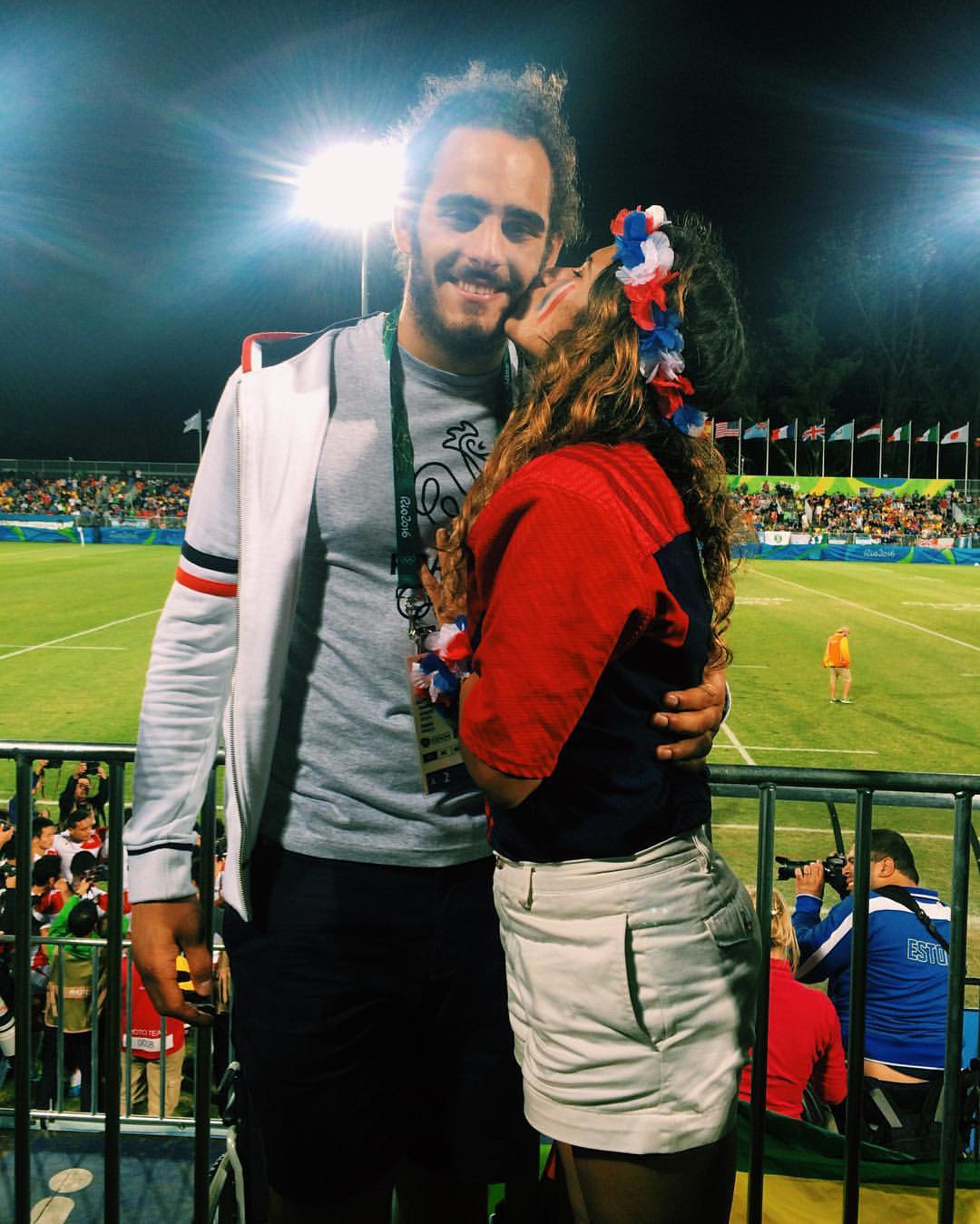
This event was not about me, is not about me, and has never been about me, but is very dear to my heart. As I looked on while my boyfriend and his teammates celebrated the first of many hard-earned Olympic caliber victories, I couldn’t stop smiling. The little flame of pride I carry for my significant other burned bright inside of me.
“I am so proud of you,” I told him too many times. “You’ve worked so hard for this; you’re going to the OLYMPICS.”
Humbly, he smiled, thanked me for my encouragement, and reminded me that he had no guarantee of joining the team in Rio until the final selection had been made. I laughed and rolled my eyes at the humility that kept him from celebrating a victory too early, but the humility with which he approached his performance only made me love him more.
I looked on as he braced himself for the coming season and gave himself untiringly to his sport. Tournament after tournament, he turned his sweat, blood, and energy over to his team. He strained muscles, shed blood from his knees, elbows, and face, endured bruising tackles, but tackled harder still and lost himself in the game. He left everything on the field. My questions about the acquisition of particular battle wounds or thoughts that ran through his head at particular moments went unswered, no longer tangible pieces of him, but splashes of moments that he had hardly had time to feel, their passing evidenced only by footage of the match.
I took to admiring his work from afar, sprinkling into our conversations after the tournaments commentaries of praise, recalled moments of shock, or questions I didn’t always expect an answer to. I watched matches that took place in New Zealand, South Africa, and Singapore whizz by on my computer screen via online streaming, and became a devoted fan and a spectator in every sense of the term. Through my screen, I felt, with consuming emotion, every second of anticipation and liftoff during a lineout as he jumped up to snatch the ball, every successful pass and try, and every milisecond of time he spent writhing on the ground after a hard blow. I lost myself in his actions and the subsequent actions of his teammates for those precious 15 minuets that the team took the field, and checked scores somewhat obsessively when I couldn’t watch in an effort to understand what he was experiencing, since I now understood that asking about it consisted only of a futile exercise in memory groping.
Like his other fans, I liked the posts on his Facebook fanpage, proudly shared articles written about his achievements, and added to the slew of messages of encouragement in his inbox while he was away at tournaments, but remained otherwise somewhat disconnected, a part of his life that lived far away from the rugby field. On vacations, at dinners, and on nights out with our friends, we spoke of upcoming museum expositions, cool new restaurants to try, our favorite travel experiences, and shared dreams and progress made on our barely blossoming careers, only occasionally brushing quickly and daintily over Rugby.
As the Olympics began looming on the horizon early this summer, the quick brushover became a nicely rehearsed: “Fingers crossed, we’re just waiting on the selection;” his neat, tidy, and humble response for a myriad of challenging questions. Likewise, I develop a neat, formulated answer for the question that inevitably followed; “Are you going with him?” A sad shake of the head, an explanation that I had gotten to travel to Hong Kong to see him play at his biggest tournament earlier in the year, and a simple, “I wish I could be there, it’s just too expensive.” People understood.
Meanwhile, I wrestled with the hard tug of sadness that came with the realization that, should he be selected, I would only understand and share his experience at the games as much or as little as all of the other spectators watching him on television. If he played well, he wouldn’t be able to hear my voice screaming along with all the others. If he won a medal, I wouldn’t be there to hug him and congratulate him. If he lost every game he played, I wouldn’t be there to tell him real time that I was proud of him anyway. It was every one of those “ifs” that made me “just check” to see what the last minute airfare to Rio was; the “ifs” that made me “just curious” about how much tickets to the tournament were; the “ifs” that led me to “just take a look” at what kinds of accomodations were still available…
Thanks to the “ifs,” I landed in Rio de Janiero the night before the tournament started, rushed to sleep off the jet lag, and found myself sitting in a stadium in one of his jerseys, covered in painted-on French flags. Thanks to the “ifs,” I screamed and jumped up and down alongside his mom and sister when, after a year of intense training and tournaments, France took the field on the morning of August 9th and won the first ever Olympic Rugby 7s match agaisnt Australia. Thanks to the “ifs,” I got to give my favorite player a quick peck on the lips and wish him good luck before a match agaisnt New Zealand. Thanks to the “ifs” I was brought to my feet, to my knees, and to tears, moved by a sport that I hadn’t even heard of before meeting him, and was left with a raspy, strained version of my voice after only three days in Rio.
France finished seventh in the tournament. It was not the kind of olympic victory of the medaled athletes of other sports, but it was a historic moment nonetheless. The team beat Australia twice over the course of the tournament, something that had only happened 9 times of the 39 other games that they had played agaisnt them, and beautifully displayed the intensity and technique of Rugby 7s on the Olympic stage. Understandably, they were disappointed. I was not. As I watched the man I’ve loved for almost two years do what he does best, I felt nothing but intense and overwhelming love, pride, and gratitude for him. Though the tournament ended over a week ago, he’s not quite able to articulate what the Olympics meant to him or how it felt to be on that field, but I don’t need him to. The power of witnessing his performance was enough for me. Screaming at the top of my lungs from the stands, crying when a hard match was lost and jumping for joy when another was won, I was able to live inside the moments that will imprint themselves on his memory. The glory of those moments is something we will share, no explanation necessary.
 The Transition Artist
Kate, it was so exciting to go with you to see your guy in Rio at the Olympics! I love reading your journal!