I was running a little late this morning (whoops), and rushed into the lobby to a room full of country directors. The bus pulled up right as I did, so Bill (my boss) had me lead the group out to get onboard and head over to the conference center. I remembered Emily telling me a while back that the customs here are different, and that if a woman sits down at a table (or anywhere really) first, then married African men (i.e. our country directors..) won’t join her, but don’t mind if she joins them. Of course I didn’t remember this until I was already on the bus (the first on the bus, mind you), trying to make seating easy. I walked right to the back and plopped myself down, and literally felt like I had some sort of cooties or something as all the country directors made a concerted effort to sit as far away from me as possible, filling in every seat besides the ones next to me, until finally, the only other woman in the group, a communications and measurement specialist from Kenya named Rhoda, joined me in the back. We chatted about her role at the conference and my upcoming trip to Kenya.
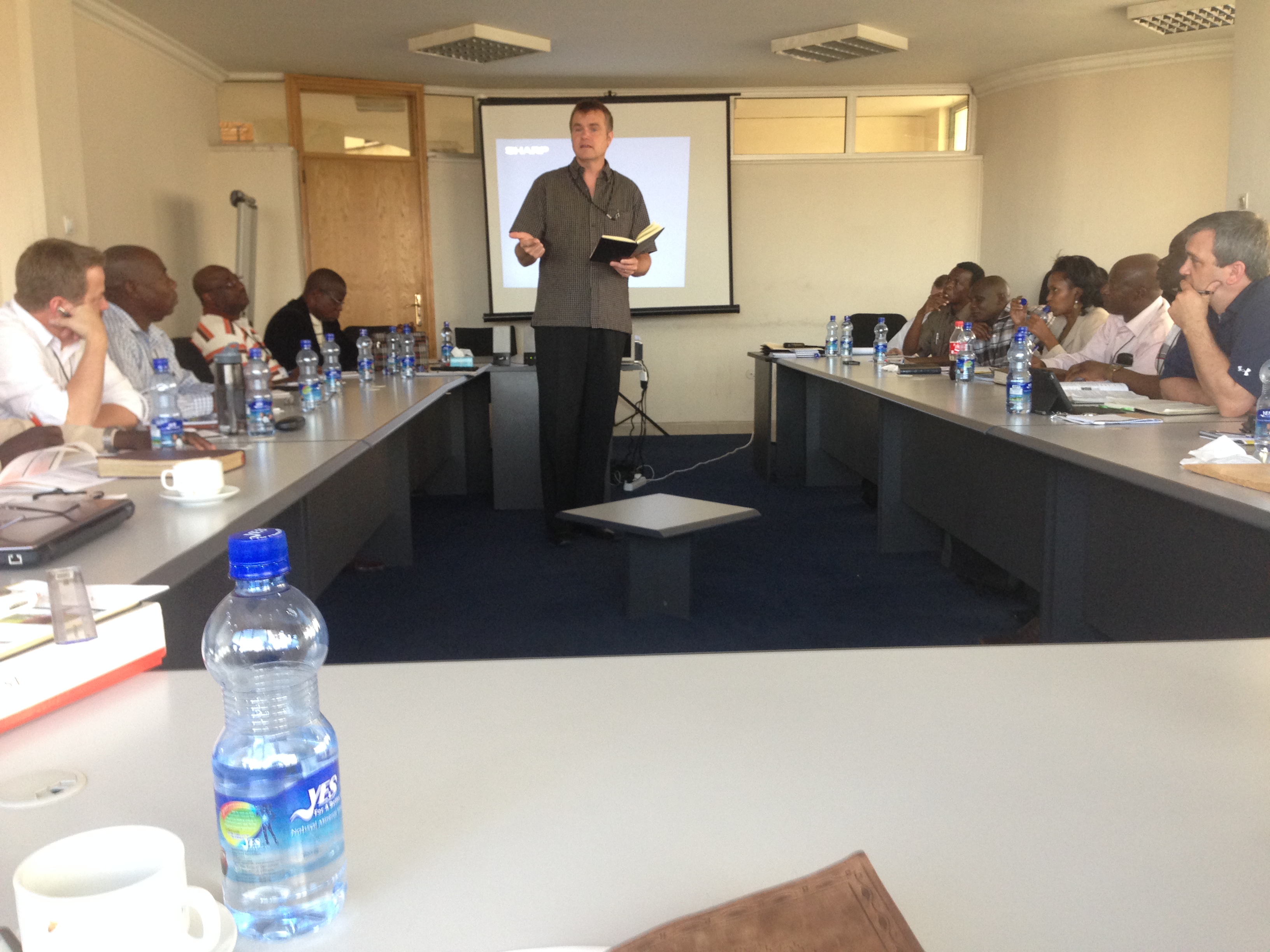
Once the group was finally gathered in the conference room, I took my seat and was ridiculously excited as I looked around and saw the table of incredible people sitting before me. I felt like I was at some kind of UN meeting (except with only the countries of Africa represented), as I took in the different facial features and characteristics of the people around me. Over the course of the day, I couldn’t help but think about how silly and easily offended so many people get (particularly in America) by racial or cultural distinctions. I all of a sudden couldn’t understand why anyone would be offended at being called black or having facial features recognized as coming from a specific region. I saw the differences in these men’s faces, and thought it was absolutely beautiful. It’s incredibly interesting to me that Ethiopians look nothing like the Sudanese, and the Sudanese look nothing like the Kenyans, and the Kenyans look nothing like the Egyptians – because they’re not the same, not even remotely. These are all African countries, and, sure, some are black, but why anyone would be offended by an attempt at understanding the background visible in their faces is a wonder to me, because I think the differences in these characteristics make them so unique and so much more interesting. What I can understand is how it’s offensive that “black” has become a dirty word, and “African American” has become “politically correct,” but that’s for another time…
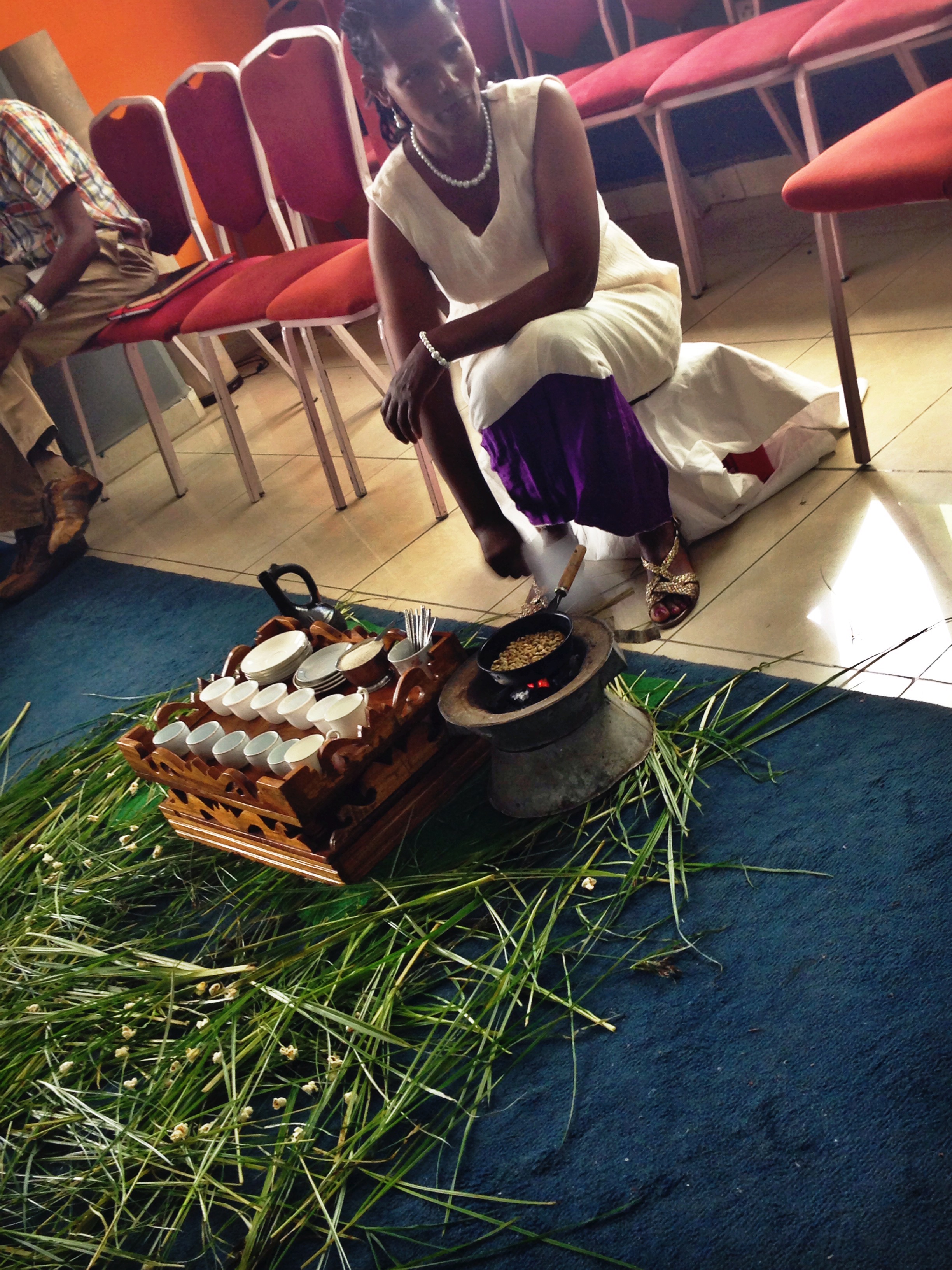
We celebrated our coming together with a traditional Ethiopian coffee ceremony, during which grass and popcorn are laid out on the ground (as a sort of welcome mat), raw coffee beans are brought in on a little pan, and then the beans are roasted over a little coal fire. A beautiful Ethiopian woman came in to do the ceremony for us, and as the shook the pan around and fanned the fire, the room filled with the smell of heady coffee and the aftermath of a few lightly burned beans. The beans are then ground by hand before being steeped. When the coffee was ready, it was poured into a special coffee pot with a wide bottom and thin stem neck and spout. There’s no strainer in the pot, so the coffee is slowly poured out in a little trickle into small cups (like espresso). It was incredibly dark and incredibly strong, and you either have to sip it or just toss it back. I sipped mine so that I could enjoy it, and can assure you I had bad enough coffee breath afterwards to knock out the entire back section of a church with a single whisper. Regardless the experience was phenomenal, and I can definitely say I’ve never experienced anything like this in America (particularly since I think anything burning inside an office building would be highly frowned upon).
I got to enjoy another traditional Ethiopian meal for lunch of various sauces and meats with Angerra (which is what the pita-like bread I was describing yesterday is called). Angerra is interesting because it’s a thin sponge bread made out of a fermented grain. It’s supposed to be really good for you, but tastes a little bitter if you try to eat it alone. I love the culture of food here, though, because they eat with their hands. I can be as messy and as into my food as I want, the only requirement is that I clean my plate (it can be seen as offensive if you don’t eat much because they think you didn’t like the food).
The rest of the day was spent getting to know the country directors, having them answer various questions about themselves in the group, and getting to share nice conversations one-on-one during breaks. I learned about the ministry of a few different country directors, and got to sit next to the Kenyan country director, Dennis Omandi, who cracked jokes every now and then and made our corner a good time. I wrote down as much as I could remember from each country director after we spoke, and hopefully I’ll get a chance to write down some of their stories, but it would take far too long for me to do that on here. I’m very much looking forward to meeting more of them and getting to know the ones I’ve already spoken to a little better throughout the course of the week, and I hope that I’ll be able to share a little better how impactful their insight is.
 The Transition Artist